
Are Ceiling-Mounted Studio Lights Better Than Light Stands?

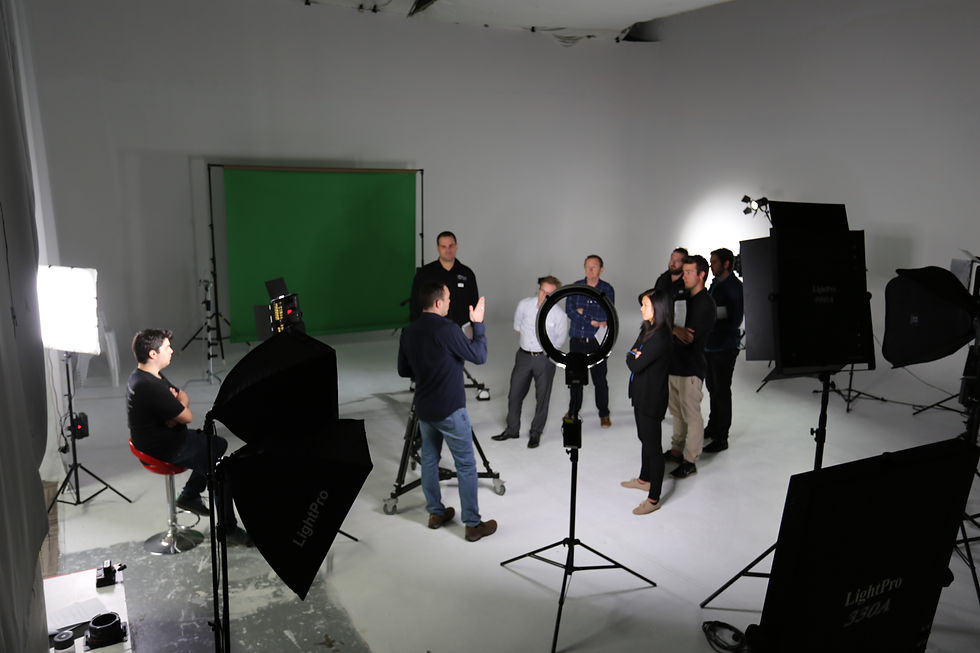
Light stands are the default starting point for almost every studio. They are flexible, portable, and relatively affordable. They also clutter the floor, create trip hazards, require repositioning for every shoot, and make it impossible for a non-specialist to walk in and operate a studio independently.
In every permanent studio Dragon Studio Solutions has built — from broadcast studios for the BBC to school studios across Sydney and Melbourne — the answer has been ceiling-mounted systems. Here is why.
The practical problems with light stands in a permanent studio
Floor clutter: every stand occupies floor space and limits shooting angles in a cyclorama studio. Trip hazards: cables from floor-standing lights run across the shooting surface — a genuine safety issue in commercial and school environments. Inconsistency: stands are moved, adjusted, and knocked between sessions. Recreating an exact setup requires careful measurement and time. Setup time: 30 to 45 minutes of lighting setup before every shoot is not an efficient production environment. Operator dependency: stands require someone who knows how to position and balance them.
What ceiling-mounted systems offer
The BBC Sydney studio is the clearest example. A converted office space, low ceiling, used daily by presenters and journalists who are not lighting technicians. Every light is ceiling-mounted. The entire system connects to a single switch at the door. Walk in, flip the switch — broadcast-ready. No technician. No setup time. No variation between sessions.
This is the operational standard Dragon Studio Solutions designs toward for every permanent studio build: a studio that works reliably for the people who use it every day, without specialist intervention.
Types of ceiling-mounted systems
System type | How it works | Best for |
Fixed tracklight (LightPro SlimLine) | Ultra-thin LED fixtures mounted flush to ceiling. Fixed position, single-switch or DMX. A few centimetres deep — no headroom loss. | Office conversions, broadcast studios, low-ceiling environments |
Pantograph system | Spring-balanced arms on ceiling track — lights can be raised, lowered, repositioned without floor stands. | School studios, multi-use spaces, setups requiring regular reconfiguration |
Overhead softbox | Large-format softbox on fixed ceiling rig. Very soft, even light from directly above. | Ecommerce, fashion, automotive, large-format commercial work |
DMX-controlled grid | Full lighting grid with programmatic scenes, colour mixing, automated presets. | Large commercial studios, broadcast facilities, multi-configuration spaces |
When light stands still make sense
Location work: you cannot mount to a ceiling you do not own. Accent and specialist lighting: boom arms and adjustable stands are used in most Dragon Studio Solutions builds for accent lights, rim lights, and specialist rigs. The key lights are ceiling-mounted; accent lights may be on repositionable booms. Small or temporary setups: if the studio will be dismantled or changed significantly, ceiling infrastructure is an overinvestment.
The school studio argument
William Clarke College, Knox Grammar, Newington College, John Monash Science School, Moriah College: all use ceiling-mounted pantograph systems. Students can lower and reposition lights, but cannot knock them over or lose them. The setup is consistent across every class. This is the design requirement for any school studio — safe, simple, repeatable.
The recommendation
For any permanent studio build — commercial, corporate, school, or broadcast — ceiling-mounted systems are the professional standard. The question is not whether to go ceiling-mounted, but which system matches your ceiling height, room dimensions, and use case. Dragon Studio Solutions specifies the right system for each brief. Contact our team in Sydney, Melbourne, or Brisbane.


I love how they mention the BBC Sydney studio just needing a switch flip-total game changer. It’s way better than guessing the refresh rate test results manually when setting up, especially with tools like a hz checker for monitor refresh rate test needs.